“Urban rehabilitation is a constant and unequal struggle of humans against water.
The more I work in this area, the more convinced I am of this.
It is no coincidence that when a roof ceases to fulfill its function, the rest of the building degrades at a completely different speed.
If you think about all the times we have been called upon to intervene in houses we have sold, the pattern is clear. It almost always has to do with water:
→ The possible problem of insulation on the roof or breakage of tiles
→ The degradation of a silicone in a gap that causes water to enter the interior
→ Or a small leak in a toilet or a faucet
And this is exactly why investing in unfinished buildings is such a sensitive issue. It is not that it should not be done, but it requires extra care.
Imagine a house whose concrete structure has been exposed to the elements for several years. What effects did the water have on this concrete?
Will the concrete be carbonated? Will there be depassivation of armor?
They sound like bad words, but they are critical points that only specialized technicians can evaluate rigorously.
Now imagine the scenario: you invest in an unfinished house, finish the work, your work is impeccable. But they have no idea of the quality of what was already there or how it has stood the test of time.
How do you sleep peacefully on a structure that was not built by you and that was “abandoned” for years?
If you are considering this type of investment, the first thing to do before any profitability account is a serious structural assessment. Trust me, 3 or 4 thousand euros paid to an evaluation and diagnosis company at the beginning of the work are paid several times in trouble saved in the 5 years of warranty after resale.
Technical Note:
🔍 Carbonated concrete: concrete is naturally alkaline, which protects the steel reinforcement inside. Over time, CO₂ from the air penetrates and reduces this alkalinity. The result: concrete loses its ability to protect steel.
🔍 Depassivation of reinforcement: when the concrete carbonates, the protective film around the reinforcement is destroyed. The steel begins to corrode, expand, and degrade the structure from the inside out.”
João Grilo via LinkedIn
Image:
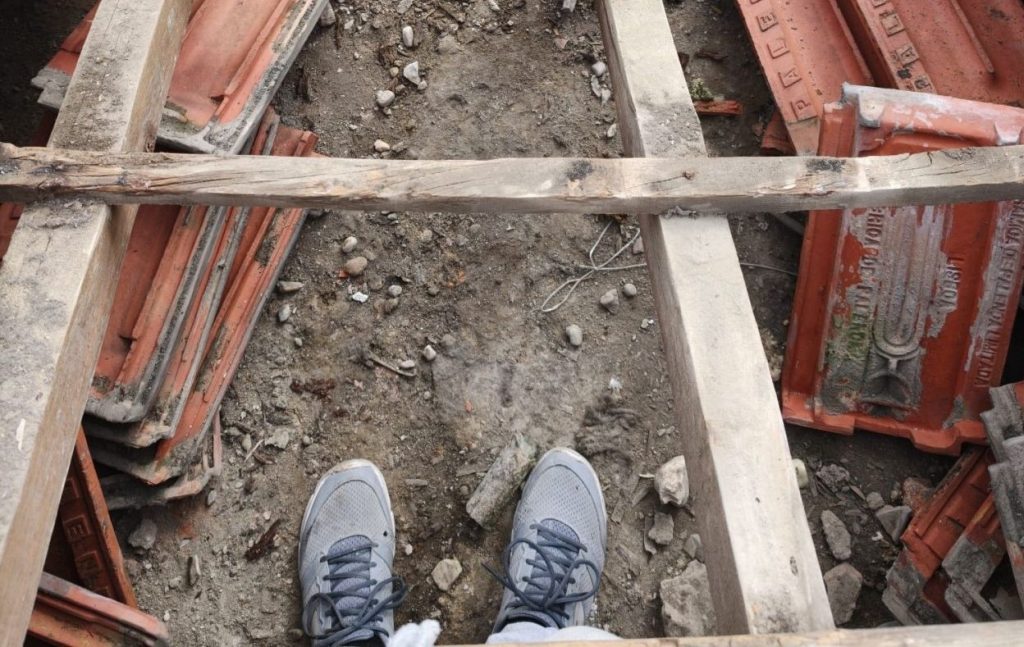
The image shows rotten beams and slats because they were in contact with water after a tile broke. It was only detected when the infiltration began to be visible on the floor below. It’s already resolved.